
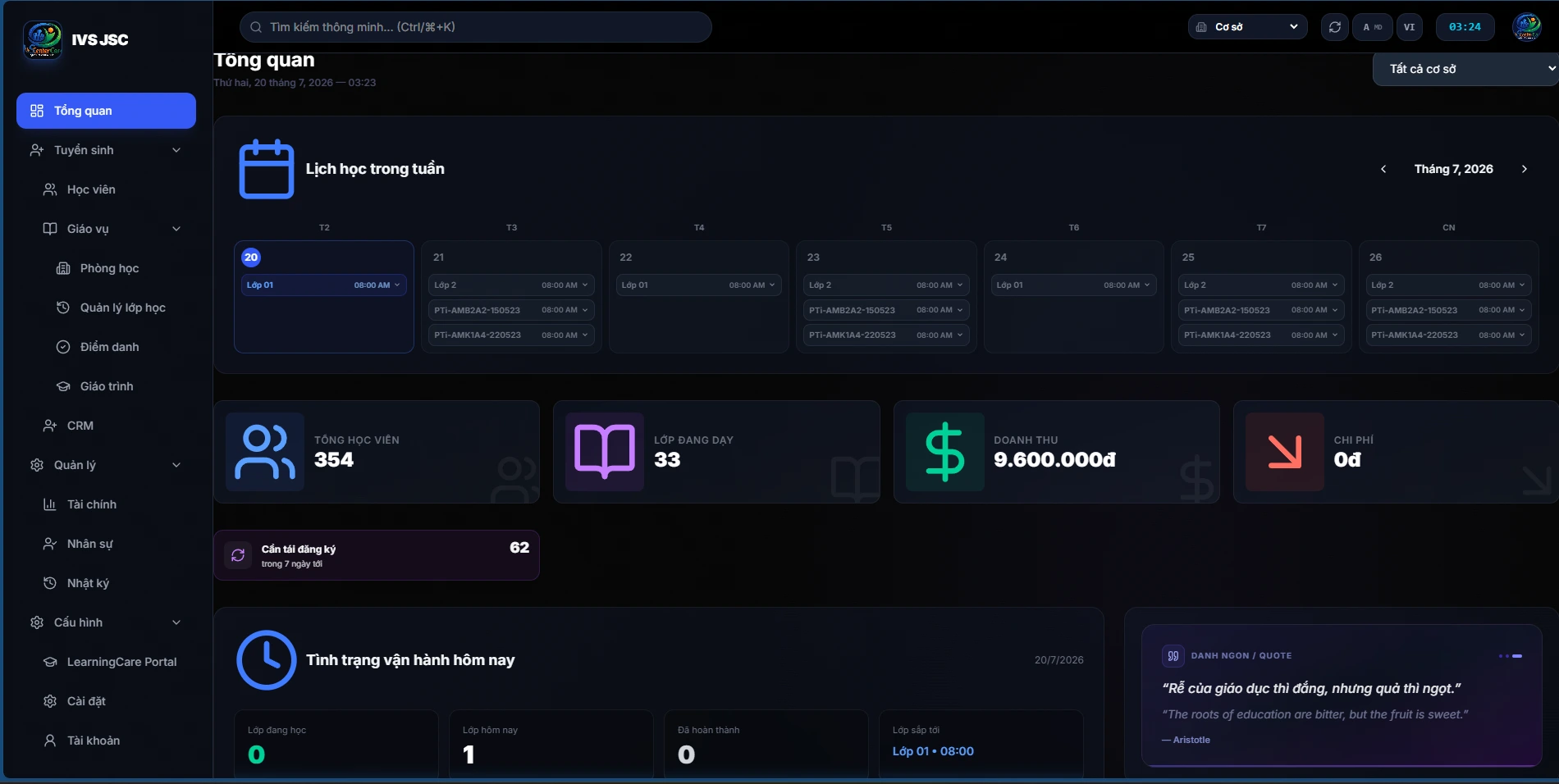
The operational problem
A language center does not operate through a single workflow. Student records affect class placement; class schedules affect teacher assignments; attendance affects parent communication; tuition status affects follow-up; and all of these activities eventually shape management reporting. When each task is handled in a separate spreadsheet or messaging thread, the organization loses a reliable shared view of its operations.
The challenge behind CenterCare was to model these relationships without turning the product into an oversized collection of screens. The system needed to reflect day-to-day work while keeping responsibilities and data boundaries understandable.
Product and architecture approach
The solution was organized around core operational entities: students, guardians, classes, teachers, schedules, attendance, tuition records, and reports. Instead of treating each module as an isolated feature, the architecture considers how an action in one area should affect another and which users are allowed to see or change the related information.
The product direction prioritizes repeatable workflows, role-based access, traceable records, and a reporting layer that can be expanded as verified operational requirements become available. This creates a SaaS foundation that can evolve in stages rather than attempting to automate every edge case in the first release.
My role
My role covers business analysis, product direction, information architecture, solution design, and coordination between operational expectations and technical implementation. A central part of the work is deciding what should be standardized in the product and what should remain configurable for different centers.
This requires listening to how staff actually complete tasks, identifying where duplicate entry or unclear ownership creates risk, and turning that understanding into a coherent product model.
Outcome and evidence policy
CenterCare now provides a structured reference model for connecting the main administrative workflows of a language center. The current public outcome is intentionally qualitative. Adoption figures, processing-time improvements, or other performance metrics will not be published until the measurement method and underlying data have been verified.