
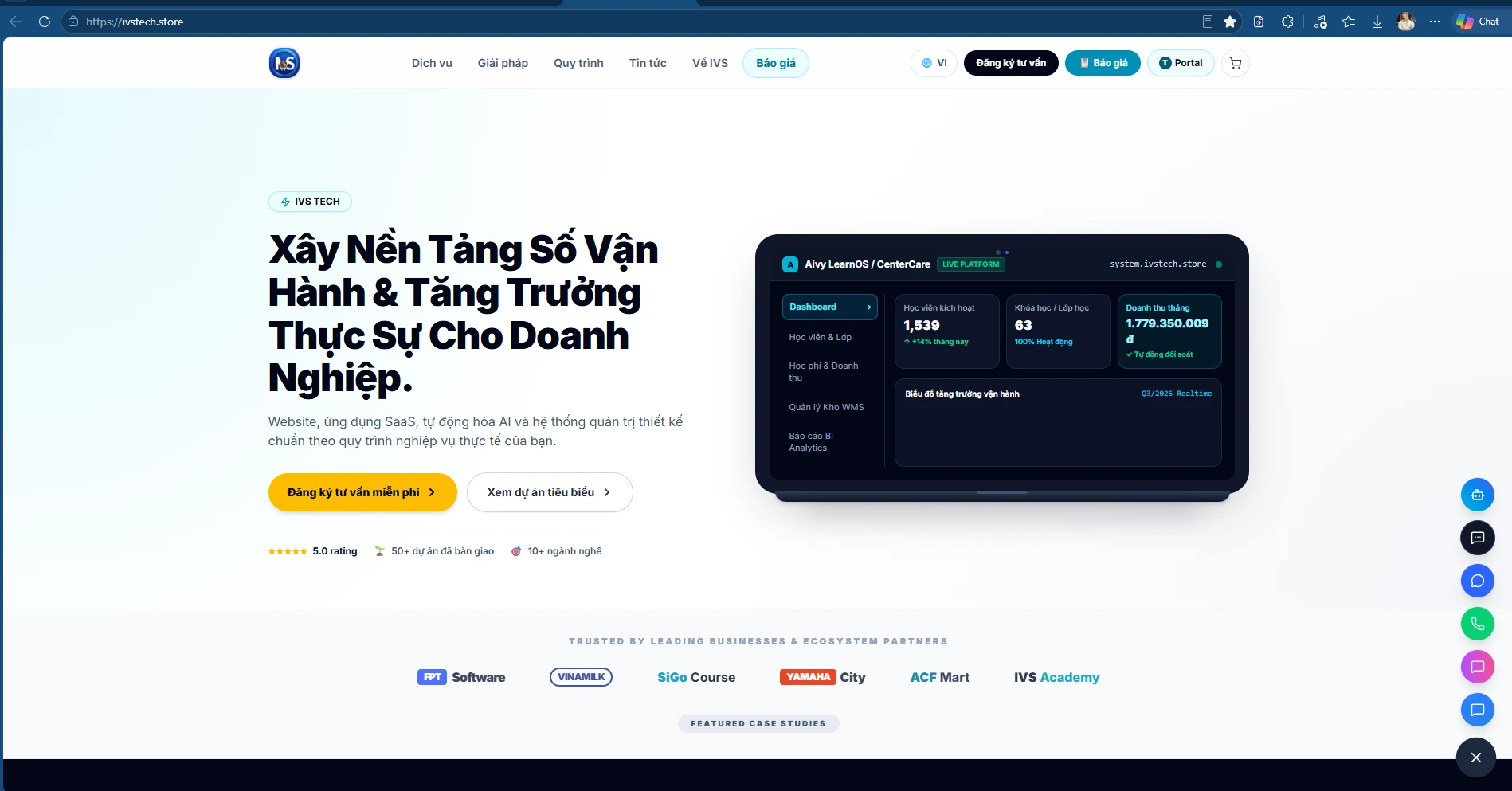
Why the positioning needed to change
A website can communicate an organization’s offer, but it rarely solves the operational problems behind that offer. Education providers and growing businesses often manage customer inquiries, schedules, documents, payments, reporting, and internal coordination across disconnected tools. The visible website is only one part of a much larger system.
IVS TECH is therefore being positioned around applied technology and digital operations. The focus is not on selling isolated technical features. It is on understanding a real workflow, identifying the friction inside it, and designing a system that people can use in daily work.
From services to an operating-system mindset
The new structure brings web platforms, SaaS products, CRM and LMS capabilities, AI-assisted automation, and cloud infrastructure into one coherent solution model. A project may begin with a public-facing website, but the architecture should account for the processes that follow: lead capture, qualification, service delivery, user permissions, notifications, data ownership, and management reporting.
This approach helps clients understand what is being built, why each component exists, and how the solution can evolve without forcing an unnecessary rewrite. Scope, trade-offs, dependencies, and operating responsibilities are made visible before development begins.
My role
My responsibility spans product strategy, business-process analysis, solution architecture, user experience, and delivery coordination. I translate operational requirements into a structure that business stakeholders and technical contributors can evaluate together.
The objective is practical alignment: the product should reflect the organization’s actual decisions and responsibilities, remain maintainable after launch, and create a reliable foundation for future automation.
What changes for clients
The positioning makes the engagement model clearer. Clients can begin with a defined operational problem, review a staged solution and budget path, and understand which capabilities belong in an initial release and which should wait. It also creates a more honest way to present project evidence: verified case studies and outcomes will be added as they are approved for publication, without relying on unsupported performance claims.